

Websites, portals, and online services
Help people navigate the digital services they depend on, complete important tasks, and find the information they came for.
Explore website accessibility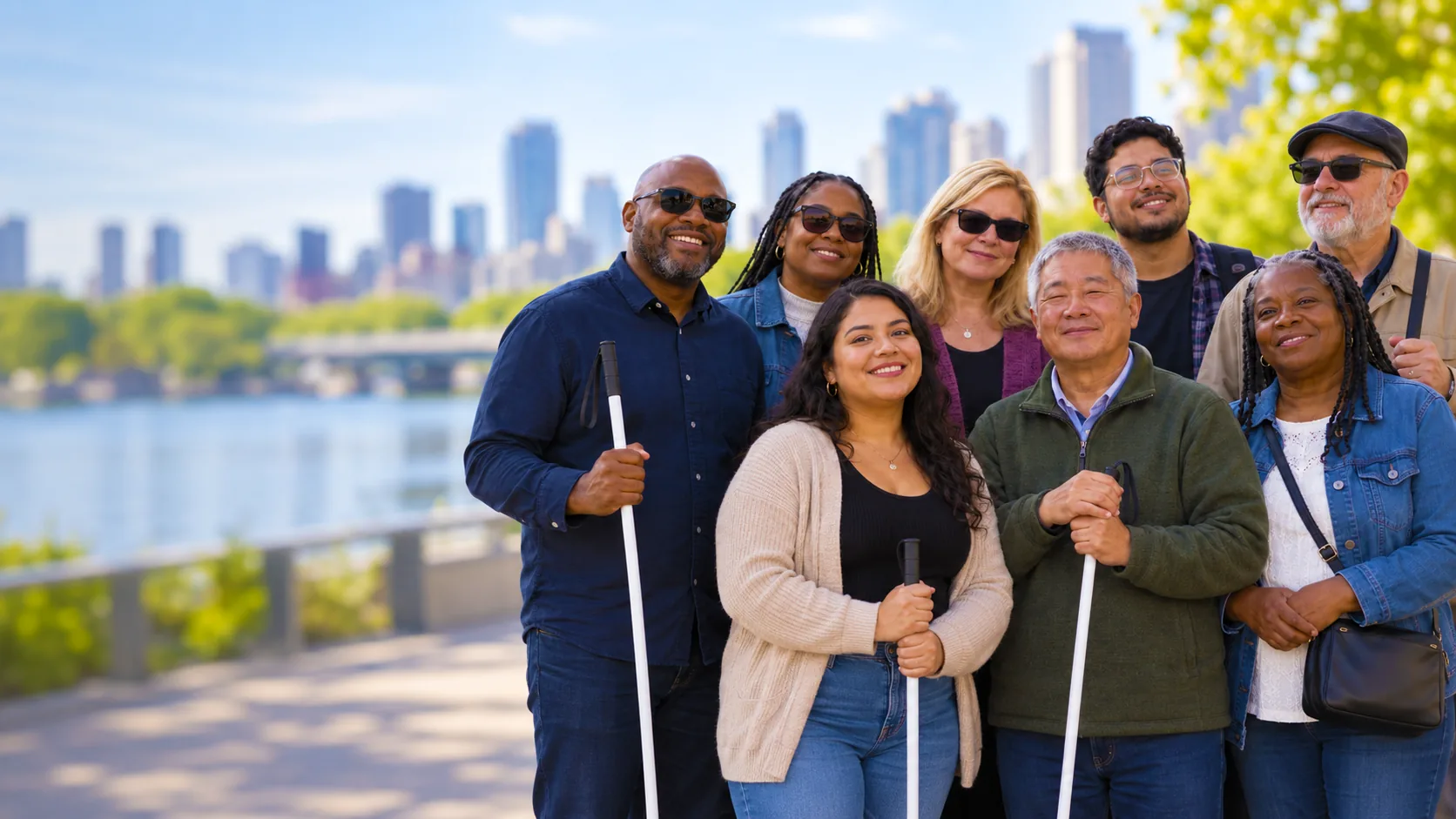
A diverse group of blind and low-vision community members stands together by a waterfront skyline.
Accessible information for every organization
Braillia helps organizations and nonprofits make websites, forms, documents, notices, and critical communications accessible so people with disabilities can independently find, understand, and act on the information they need.
Start with the information people depend on
You don’t need to fit a predefined industry category to begin. Start with the information people need to use, the decision it supports, and the consequence when it is not accessible.
Help people navigate the digital services they depend on, complete important tasks, and find the information they came for.
Explore website accessibilityMake required forms and supporting materials easier to understand, complete, and return without depending on another person.
Explore accessible documentsGive people independent access to amounts, dates, decisions, balances, payment options, and the next action they need to take.
Explore on-demand deliveryDeliver time-sensitive communication in a format people can find, understand, save, and revisit while there’s still time to act.
Explore accessible deliveryMake personal instructions, benefits, service information, and follow-up communication usable by the people relying on it.
Review this type of workflowTurn dense information into structured accessible formats people can navigate, ask about, and use with greater confidence.
Explore document accessibilityExamples, not limits
The same access problem appears wherever important information is sent, posted, or required: people need to understand it without waiting for someone else to read it aloud.
Braillia also supports
Nonprofits, education, housing, transportation, telecommunications, retail, legal and civic services, membership organizations, employers, and other teams with critical information to share.
Patient instructions, appointment information, forms, and care follow-up need to be usable when health decisions cannot wait.
Explore HealthcareBills, payment plans, shutoff notices, and service alerts need to be clear before a customer loses time, service, or choice.
Explore UtilitiesStatements, account notices, disclosures, and alerts need to be understood before a deadline, fee, or account risk grows.
Explore Financial servicesPolicy documents, claims letters, renewals, and coverage decisions need to be accessible when people must decide what comes next.
Explore InsuranceFrom barrier to independent access
Braillia brings remediation, accessible structure, delivery, and usable access into one practical path your team can grow over time.
01
Start with a website, document, form, notice, or recurring communication where inaccessible information blocks an important action.
02
Create structured accessible experiences that work with screen readers, digital Braille, audio, and the way each person needs to navigate.
03
Make information available through approved websites, direct delivery, the Braillia Portal, QR codes or SMS text messages, mobile experiences, and connected systems.

Built around your operations
Start with one need, then connect accessible documents, direct delivery, approved websites, Portal access, mobile experiences, and the systems your organization already depends on.
Keep findings, remediation, delivery, and follow-up connected.
Give people a private way to return to information when they need it.
Give accessibility, operations, legal, security, and IT teams a shared view of the work.
Buyer questions
The right next step depends on the information people need to use and the consequence when they cannot access it independently.
No. Healthcare, utilities, financial services, and insurance are examples of communication-heavy organizations. Braillia also supports nonprofits, education, housing, transportation, telecommunications, retail, legal and civic services, and organizations that need people to independently use important information.
Begin with the information that carries the greatest consequence if someone cannot use it independently: a website task, form, bill, statement, notice, decision, patient instruction, enrollment packet, or recurring communication with a deadline.
Yes. Organizations can begin with one focused accessibility workflow, then extend through the Braillia Portal, direct delivery, QR pickup and SMS text delivery, APIs, and organization-managed access as their needs grow.
Braillia helps teams find barriers, prepare structured accessible information, deliver it through usable channels, and maintain evidence and operational visibility. Legal teams remain responsible for organization-specific legal determinations and compliance guarantees.
Show us the website, document, form, notice, or recurring workflow people need to use. Together, we can identify a practical accessibility path forward.